
In the first installment of our DFM Playbook, we discussed design decisions that reduce machining cost and shorten lead time. In this second chapter, we want to dive deeper and explore Geometric Dimensioning and Tolerancing (GD&T) and how it directly impacts project success.
At Coastal Machine & Supply, we often see prints that have been overengineered for the part’s actual function. When that happens, manufacturing becomes more complex, production costs rise, and schedules suffer due to longer lead times.
Here are some GD&T considerations to ensure your parts are optimized for both manufacturability and functionality.
Designing with Function in Mind
Sometimes, when engineers are trying to simplify the design process, teams can unintentionally create challenges later in production. We often see this in new parts designed based on legacy components.
Historical part designs can be useful as a reference, but they can lead to unnecessary tolerances or GD&T requirements that no longer apply. But function matters, and this is what should drive the design.
The new part may not be intended for the same function as the original, and because of this, it does not actually require the same level of precision.
In these situations, communication becomes critical. When our team understands the intended function of the part, we can collaborate and help identify where tolerances can be relaxed without affecting performance. This improves manufacturability, reduces costs, shortens lead times, and leads to smoother operations.
Long Parts and Practical Tolerancing
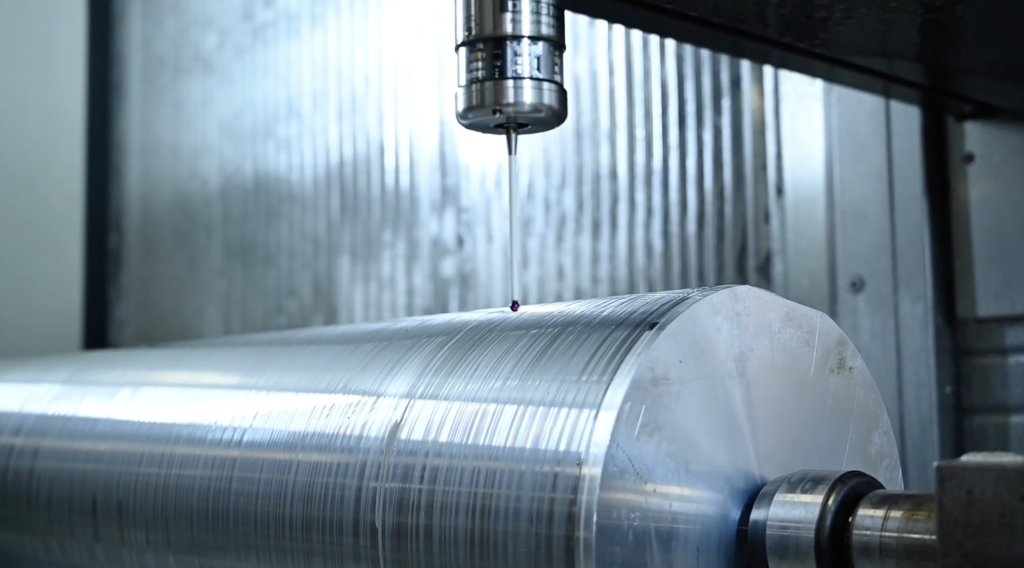
At Coastal Machine & Supply, we specialize in large-scale machining. On these large components, especially long cylindrical parts, tight tolerances and true position callouts can become difficult to hold consistently.
As lengths increase into the 60- to 80-inch range and beyond, maintaining extremely tight positional tolerances is very challenging and often not feasible. It requires multiple setups and extended CMM verification, leading to an unnecessarily complex production process.
In these situations, we work directly with customers to evaluate functional requirements and simplify callouts without compromising performance.
Even small adjustments, such as moving from ± 0.001” to ± 0.005”, can significantly improve lead time and cost while still meeting design intent.
Tolerance Stackups and Process Planning
Producing parts for demanding industries like oil and gas, space, aerospace, and defense often involves multiple downstream processes, such as machining, anodizing, grinding, and coating.
Each step in the process can affect material dimensions. These changes must be accounted for in the print so that final assembly fit is not compromised.
For example, we might need to machine slightly over or under dimensions to account for material changes during anodizing or grinding.
Careful planning is essential for jobs of this complexity. We evaluate the full manufacturing process upfront so that tolerances are maintained where they matter most, preventing fit issues and the need for rework.
Datums and Inspection Strategy
Datum selection and order of precedence play a key role in manufacturing and inspection. Many of the precision machined components we produce are part of larger assemblies, so performance depends on proper fit.
At Coastal, customers trust us to manufacture parts correctly the first time so they integrate seamlessly into complex assemblies. Ordering primary, secondary, and tertiary datums correctly is especially important because it defines how a part is located and measured during inspection, directly impacting final fit.
If datum order is unclear or incorrect, it can cause issues down the line. For example, if a primary datum is flipped, inspection may reference a non-critical feature, leading to inaccurate measurement setups.
Our team often reviews prints and asks questions to confirm datum features are necessary for the function of the part. In some cases, simplifying datum structures can improve manufacturability and inspection efficiency.
With a well-structured datum scheme, parts will be measured the way they are intended to function in the final assembly.
Turning Prints into Production-Ready Parts
Clear, intentional GD&T leads to better results.
When designs are driven by function and prints are well-defined, unnecessary complexity is eliminated early, meaning production starts faster and manufacturing becomes more efficient.
That’s why collaboration matters. Being open to design input ensures your production is both cost- and time-efficient. Our recommendations are always made with your success in mind.
For more insight on GD&T, contact Coastal Machine & Supply, or request a quote if you are ready to get started on your next project.